
The Technical Secrets of Premium Pool Cue Butt Construction
In the world of professional billiards, specifically for Chinese 8-ball and American Pool, the cue butt is often overlooked by novices but revered by masters. While the shaft dictates the hit, the butt (rear section) is the “engine room”—it governs the cue’s balance, energy transfer, and sensory feedback. For a brand like Uniwave, where minimalist aesthetics meet high-end performance, understanding the intricate craftsmanship of the butt is essential.
Material Science: The Foundation of Feel
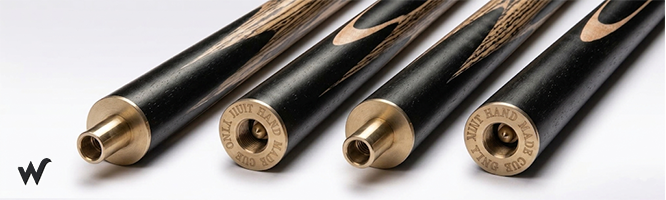
The construction of a premium pool cue butt begins with the selection of high-density exotic hardwoods. Unlike entry-level cues made from common maple, professional instruments often utilize:
- African Ebony: Renowned for its natural weight and extreme stability. Ebony’s tight grain structure provides a “stiff” hit that many pros prefer for power shots.
- Exotic Rosewoods: Including Cocobolo and Macassar Ebony, these woods are prized for their oily resin content, which naturally resists humidity—a critical factor for international shipping.
- Technological Stability: Premium makers ensure all blanks are seasoned for over 24 months, reaching a stabilized moisture content of 6%–8%. This prevents warping and ensures the cue remains straight for a lifetime.
The Science of Acoustic Feedback and Vibration Control
Beyond structural integrity, the choice of butt material dictates the acoustic signature of the cue. A high-end ebony butt doesn’t just feel solid; it produces a distinct, crisp “clack” upon impact. This auditory feedback is a crucial sensory cue for professional players to gauge the quality of their stroke. At Uniwave, we analyze the vibration dampening properties of our exotic wood combinations to ensure that secondary vibrations are filtered out, leaving only the pure, tactile “hit” that allows for micro-adjustments in ball control.
Core Construction & Splicing Techniques
For split cues (1/2 jointed cues), the internal construction must be flawless to ensure the joint remains the strongest point, not the weakest.
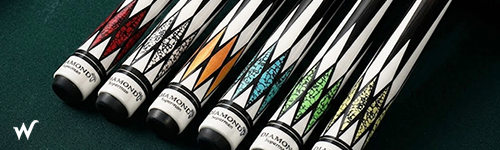
- Full-Splice vs. Half-Splice: The traditional “four-point” splice is not merely decorative. By wedging contrasting woods into one another, the cue gains structural integrity. This interlocking design distributes the shock of impact more evenly through the handle.
- Internal Coring: To achieve a specific weight (typically 18oz to 19.5oz) without compromising the wood’s beauty, high-end cues often feature a “cored” butt. A lighter wood core is inserted into an exotic wood sleeve, allowing for perfect weight distribution and a consistent center of gravity.
- The Art of Veneering: Multiple layers of thin, colored wood veneers between the points add aesthetic depth. This is where craftsmanship meets art, creating the iconic “spear” patterns seen in luxury cues.
Ergonomics and Precision Finishing
The final interface between the player and the tool is the butt diameter and taper. Professional cues require a precision taper that transitions smoothly from the joint to the grip area, typically maintaining a diameter of 29mm to 32mm depending on the discipline. Whether finished with a high-gloss UV lacquer or a breathable oil finish, the goal is twofold: protecting the timber from hand sweat and providing a consistent grip friction. For players prioritizing tactile security, top-grain leather wraps are integrated with zero-tolerance seams, ensuring the wrap feels like a natural extension of the wood.
Why Quality Construction Matters for B2B Buyers
For distributors and serious players, a well-built pool cue butt represents a long-term investment. It ensures:
- Consistency: Every shot feels the same, regardless of power.
- Durability: High-grade materials resist the wear and tear of tournament play.
- Resale Value: Cues built with authentic ebony and precision inlays retain their value far better than mass-produced alternatives.
At Uniwave, we believe that a cue is a tool of precision. By focusing on the “invisible” details inside the butt—from the weight bolt calibration to the seasoning of the ebony—we deliver an instrument that doesn’t just look high-end but performs at a championship level.