
How Cue Tips Change Your Game
When it comes to mastering billiards, players often spend countless hours obsessing over cue straightness, shaft deflection, and wrap textures. While these components are undoubtedly important, there is a tiny, often overlooked element that makes direct contact with the ball on every single shot: the cue tip
Whether you are spinning the cue ball for a complex safety or delivering a powerful break, your cue tip is the bridge between your intention and execution. Selecting the right tip can elevate a decent game into a masterclass of precision.
The Anatomy of Control: Material and Layers
Historically, cue tips were simple pieces of molded leather. Today, modern engineering has transformed them into highly sophisticated components. Most professional-grade tips are made from pigskin or cowhide, divided into two primary categories:
- Single-Layer Tips: Made from a single piece of treated leather. They offer a classic, solid feel and are highly economical, though they tend to mushroom (flatten out) faster over time.
- Laminated (Layered) Tips: Constructed by bonding multiple thin layers of leather together. Laminated tips retain their shape exceptionally well, distribute impact evenly, and provide superior consistency.
At Uniwave, we believe that consistency is the foundation of confidence. That is why our premium cue lines focus on high-performance layered leather tips. By ensuring uniform density across every layer, a Uniwave cue provides a predictable response on every hit, allowing players to focus entirely on their alignment and strategy rather than compensating for equipment variance.
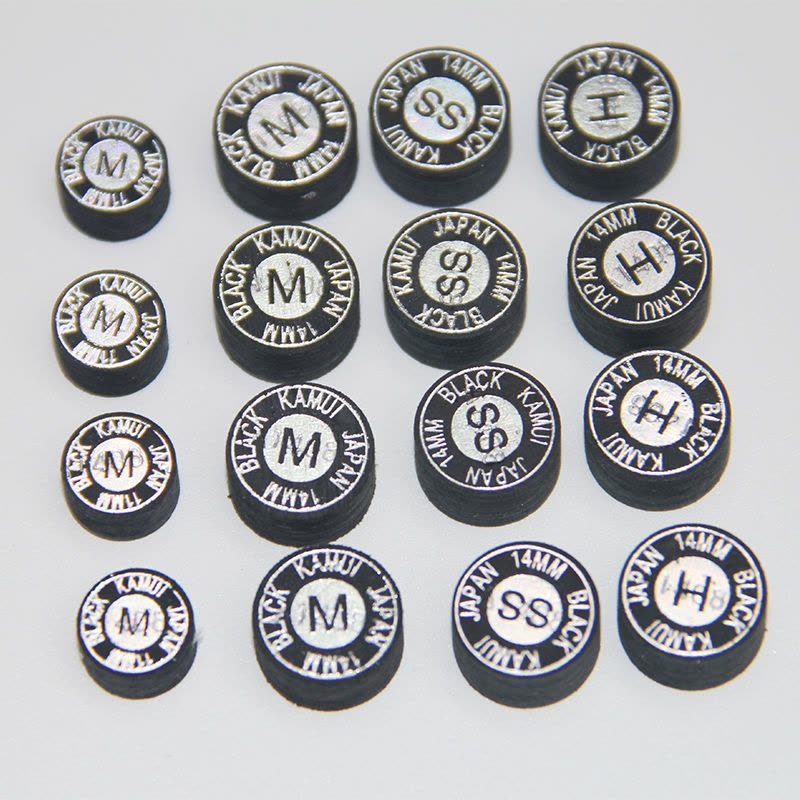
Soft, Medium, or Hard? Finding Your Density
Cue tips generally come in three primary hardness levels, each catering to a distinct style of play. Understanding these differences is crucial for finding your perfect match:
1. Soft Tips
Soft tips absorb more energy upon impact, meaning the cue ball stays in contact with the tip a fraction of a second longer. This increased contact time allows players to apply maximum spin (english) with ease. However, soft tips require frequent maintenance, as they compact and deform quickly.
2. Medium Tips
The gold standard for the vast majority of players. Medium tips offer a perfect equilibrium, providing excellent spin capabilities while maintaining enough stiffness for solid power transfer. They hold their shape well and offer a balanced, intuitive feedback.
3. Hard Tips
Hard tips absorb very little energy, transferring maximum force directly to the cue ball. They are the preferred choice for break cues and jump cues. While they require minimal maintenance and rarely mushroom, they demand precise technique, as a slight mishit can easily result in a miscue.
Elevating the Standard: The Uniwave Approach
For players seeking uncompromising quality, the integration of premium leather technology is a game-changer. The Uniwave philosophy centers on giving players a high-end, minimalist tool that performs flawlessly under pressure.
Every Uniwave cue is engineered to harmonize the shaft’s deflection properties with the tip’s density. This synergy ensures that whether you prefer a soft, spin-heavy approach or a firm, structured stroke, the feedback traveling up the shaft to your hands is clear, crisp, and immediate. We treat the cue tip not as an afterthought, but as the critical apex of the entire cue anatomy.
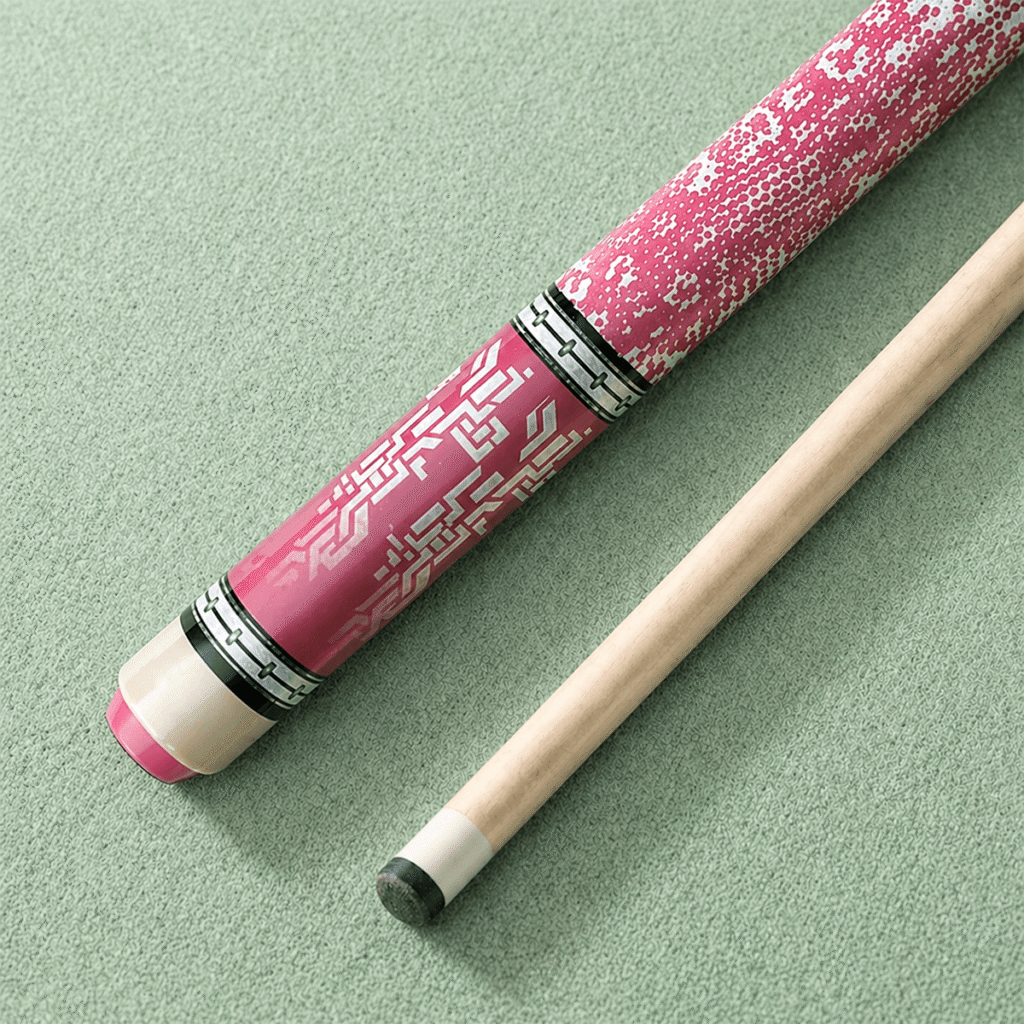
Essential Cue Tip Maintenance Tips
Even the best tip in the world will underperform if it is neglected. To keep your game sharp, implement these simple maintenance habits:
Burnishing the Sides: If your tip begins to “mushroom” over the edge of the ferrule, use a burnishing tool or a fine abrasive to smooth the sides down. This prevents the leather from splitting and maintains structural integrity.
Scuffing and Shaping: Use a dedicated tip tool to maintain a proper dome shape (typically matching the curvature of a nickel or a dime). A properly shaped tip distributes impact perfectly and holds chalk efficiently.
Aerating: Over time, a tip becomes compacted and smooth, losing its ability to hold chalk. Use an aerator (a tool with small needles) to gently pierce the leather, creating microscopic pockets for the chalk to grip.
Conclusion: The Final Touch of Excellence
In the game of billiards, success is measured in millimeters. A fraction of a millimeter off-center can be the difference between a spectacular pot and a devastating scratch. By investing in a high-quality leather tip and maintaining it properly, you eliminate a massive variable from your game.
If you are ready to experience the difference that precision engineering makes, explore the Uniwave collection. Designed for discerning players who value clean aesthetics and elite performance, our cues ensure that your connection to the table is always seamless, powerful, and perfectly controlled.