
Which wooden cue suits you the best: Maple or Ash?
When choosing a pool cue, the shaft material is one of the most critical decisions. Two woods dominate the market: Maple or Ash. Maple is the standard for American pool cues, prized for its density and consistency, while Ash is a classic choice, especially in snooker and European styles, known for its grain and tactile feedback. Neither is universally “better”—the right one depends on your playing style, whether you prioritize power, control, spin, or feel.
Understanding the differences in density, flex, feedback, appearance, and maintenance helps you match the wood to how you play. Let’s break it down.
Physical and Performance Differences
Maple is a hard, dense North American hardwood with a straight, fine grain and uniform structure. It typically weighs more per volume and offers excellent compressive strength. This results in a stiffer, more solid hit with good rebound and power transfer. Many players describe maple shafts as having a “muted” or “delayed” feedback—less vibration travels back to your hand, giving a smoother, more controlled sensation on impact.
Ash, by contrast, is slightly less dense with a more open grain and prominent growth rings that create a distinctive “chevron” or arrow-like pattern. It has a bit more natural flex, leading to a sharper, more direct response. The hit feels crisper and more lively, with better transmission of “touch” or feedback from the cue ball. Ash is often praised for lower cue ball deflection when applying English (side spin), making it easier for some to generate spin naturally.
In terms of numbers:
- Maple generally has higher density and compressive strength, contributing to durability and stability.
- Ash offers good elasticity and impact toughness but can feel slightly more flexible, especially in thinner shafts.
For pool (American 8-ball or 9-ball), maple dominates because the heavier balls and powerful breaks reward its solid, consistent performance. In snooker or precision games with lighter balls and finer control, ash remains popular for its responsive feel.
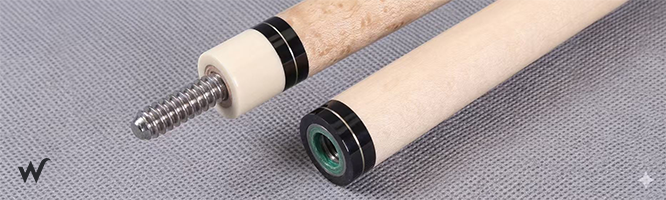
Pros and Cons of Each Wood
Maple Shaft Pros:
- Excellent stability and resistance to warping—performs more consistently across humidity and temperature changes.
- Smoother finish with minimal visible grain; easier to keep clean and maintain a polished look.
- Strong power transfer and solid feel, ideal for breaking and hard shots.
- Highly durable; top-quality maple holds up well over years of play.
- Less deflection in some setups, boosting confidence for players who rely on precision aiming.
Maple Shaft Cons:
- Feedback can feel “muffled” or delayed compared to ash—some players miss the crisp sensation.
- In lower-quality pieces, it may feel less lively or “dead” if not properly selected.
- Can be more affected by extreme humidity if the finish is poor (though generally more stable than ash in varied conditions).
Ash Shaft Pros:
- Superior tactile feedback and “sharp” hit—easier to “feel” the shot and adjust spin or speed.
- Beautiful, distinctive grain that many players use as a visual alignment aid.
- More flex helps with generating English and provides a softer, more forgiving feel on finesse shots.
- Traditional choice that many pros and experienced players love for its direct response.
Ash Shaft Cons:
- Open grain requires filler during manufacturing and can show wear or roughness over time if not well-maintained.
- Slightly more prone to environmental changes (swelling/shrinking), though high-quality ash is very stable.
- May transmit more vibration, which some find distracting rather than helpful.
- Grain lines can be visually busy for players who prefer a clean, uniform shaft look.
Many cue makers note that ash can feel stiffer in certain tapers, while maple’s density provides a more “solid” confidence boost for power players.
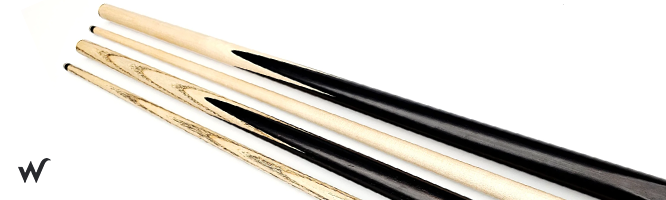
Which Wood Matches Your Playing Style?
Power Players and Break Specialists: Choose Maple. Its density delivers a firm, energetic hit that translates force efficiently into the cue ball. Great for American pool where breaking power and consistent control matter. If you like a modern, reliable feel with minimal surprises, maple is often the safer, more forgiving option for intermediate to advanced players.
Finesse and Spin Players: Lean toward Ash. The extra flex and crisp feedback make it easier to apply and control side spin. Players who “play by feel” rather than pure mechanics often prefer ash’s lively response. It’s especially popular among snooker enthusiasts or those who value touch over raw power.
Beginners: Maple is usually recommended. Its smooth, consistent performance builds confidence faster, and it’s easier to maintain. Many entry-level and mid-range pool cues use maple shafts for this reason.
Experienced Players Switching Games: If you’re moving from snooker (ash) to pool, maple might initially feel “muffled,” but many adapt and appreciate its stability. Conversely, ash can feel more “alive” if you’re used to maple’s solidity.
Environmental Considerations: In humid or variable climates (common in many regions), well-finished maple tends to hold its shape better. Ash performs excellently indoors with proper care.
Ultimately, there is no absolute winner—top players have succeeded with both. Some even use hybrid setups or test multiple cues. The best advice is to try before you buy: hit balls with both woods and see which gives you better connection and consistency.
Other Factors to Consider
Beyond the wood, look at taper (pro taper vs. straight), tip size (smaller for more spin, larger for control), weight, and joint type. A high-quality maple or ash cue from a reputable maker will outperform cheap versions regardless of wood. Proper maintenance—cleaning, burnishing the shaft, and avoiding extreme conditions—extends life for both.
Carbon fiber shafts are gaining popularity for ultimate consistency and low deflection, but traditional wood still offers the organic feel most players love.
Final Recommendation
If your style emphasizes power, stability, and a smooth modern hit, go with Maple—it’s the go-to for most pool players and excels in American games. If you crave crisp feedback, touch, and classic aesthetics, Ash might elevate your game, especially for spin-heavy or precision play.
Test both if possible. Many players discover their preference only after extended play. Whichever you choose, a well-made cue in the right wood can transform your performance and enjoyment at the table.
The perfect cue isn’t about the “best” wood—it’s about the best match for your playing style. Invest time in demoing, and you’ll find the shaft that feels like an extension of your arm.